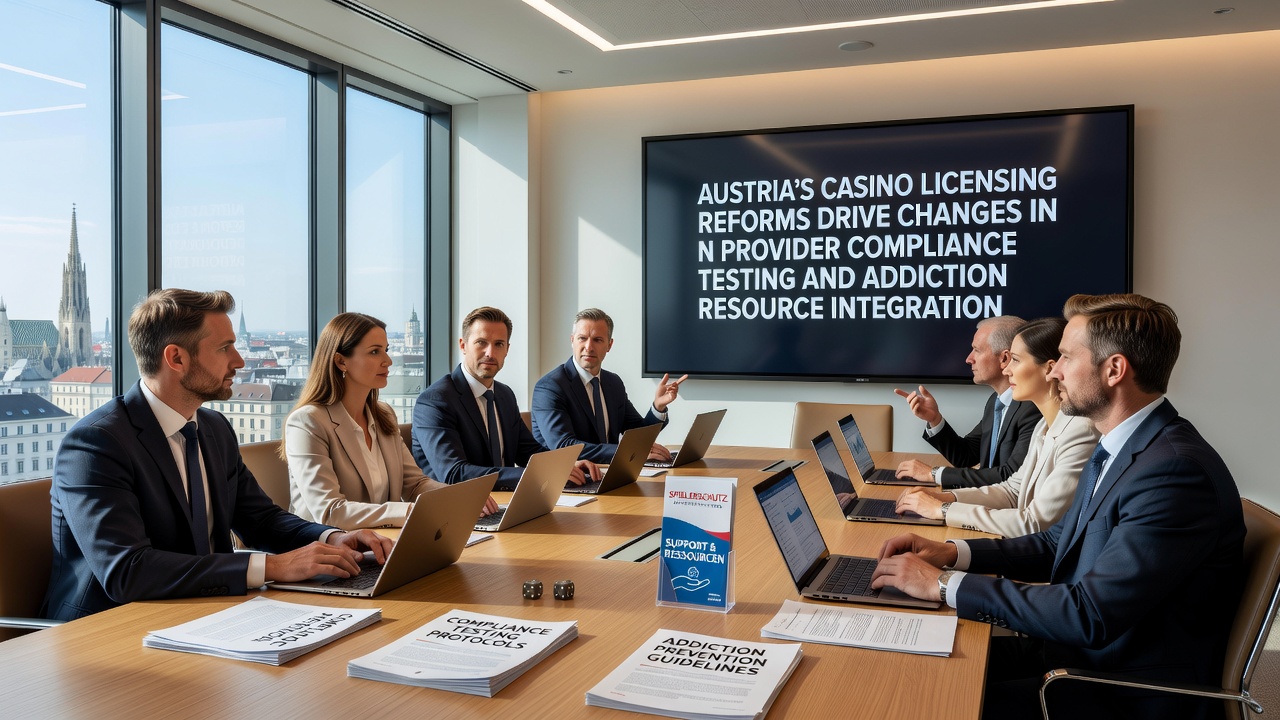
Austria's Casino Licensing Reforms Drive Changes in Provider Compliance Testing and Addiction Resource Integration
Austria continues to refine its approach to online casino regulation through licensing reforms that emphasize stricter provider compliance testing alongside deeper integration of addiction resources, and observers note these adjustments build on earlier frameworks established under the Glücksspielgesetz.
Reforms rolled out in recent cycles require operators to demonstrate enhanced verification processes for game fairness, payment security, and player data protection, while September 2026 marks a key phase where new testing protocols take effect for license renewals.
Overview of Licensing Reforms
The Austrian regulatory environment has evolved to address gaps in oversight, and data from the Federal Ministry of Finance shows that updated licensing criteria now mandate third-party audits at more frequent intervals, which compels providers to adjust their internal systems accordingly.
These changes align with broader European efforts to standardize gambling oversight, yet Austria maintains distinct requirements that focus on localized player protections, and experts highlight how the reforms tie licensing approval directly to measurable outcomes in compliance and harm reduction.
Shifts in Provider Compliance Testing
Compliance testing has expanded beyond traditional random number generator checks to include comprehensive evaluations of responsible gambling features, such as deposit limits and self-exclusion mechanisms, and researchers at institutions across the EU have documented similar patterns in other member states.
Providers must now submit detailed reports on how their platforms detect and respond to signs of problematic play, which means automated monitoring tools undergo rigorous validation before any license extension occurs, and this process involves collaboration with certified testing laboratories.
One case study from an Austrian operator revealed that integrating real-time analytics into compliance frameworks reduced processing times for regulatory submissions, while maintaining accuracy standards set by oversight bodies.

Integration of Addiction Resources
Addiction resource integration forms a central pillar of the reforms, requiring providers to embed direct links to counseling services and educational materials within their interfaces, and figures from national health agencies indicate increased uptake of these tools following mandatory implementation.
Operators collaborate with organizations like the Austrian Institute for Addiction Prevention to customize resources for different player demographics, which includes multilingual support and personalized risk assessments that update based on user behavior patterns.
According to findings from a collaborative report involving Canadian research centers, such integrations have shown measurable effects on player engagement with support options when embedded seamlessly rather than presented as separate portals, and Austrian providers have adopted comparable strategies.
Impacts on Market Participants
Smaller providers face particular challenges in meeting the combined demands of enhanced testing and resource integration, since these requirements often necessitate investments in new technology and staff training, and industry associations report that many have formed partnerships to share compliance infrastructure.
Larger operators, meanwhile, leverage existing data systems to streamline reporting, which allows quicker adaptation to the September 2026 deadlines, and this disparity has prompted discussions among trade groups about potential support mechanisms for mid-sized entities.
Future Developments and Monitoring
Regulatory bodies plan ongoing evaluations of the reforms' effectiveness, with initial assessments scheduled after the 2026 implementation wave, and evidence from pilot programs suggests that integrated compliance and addiction measures can coexist without disrupting core gaming operations.
Providers continue to monitor international benchmarks from sources such as the National Council on Problem Gambling to refine their approaches, and this cross-regional learning supports Austria's goal of maintaining a balanced regulatory landscape.
Conclusion
The licensing reforms in Austria represent a coordinated push toward tighter compliance testing and more embedded addiction resources, and these elements together shape how providers operate within the market as of the September 2026 milestones and beyond.